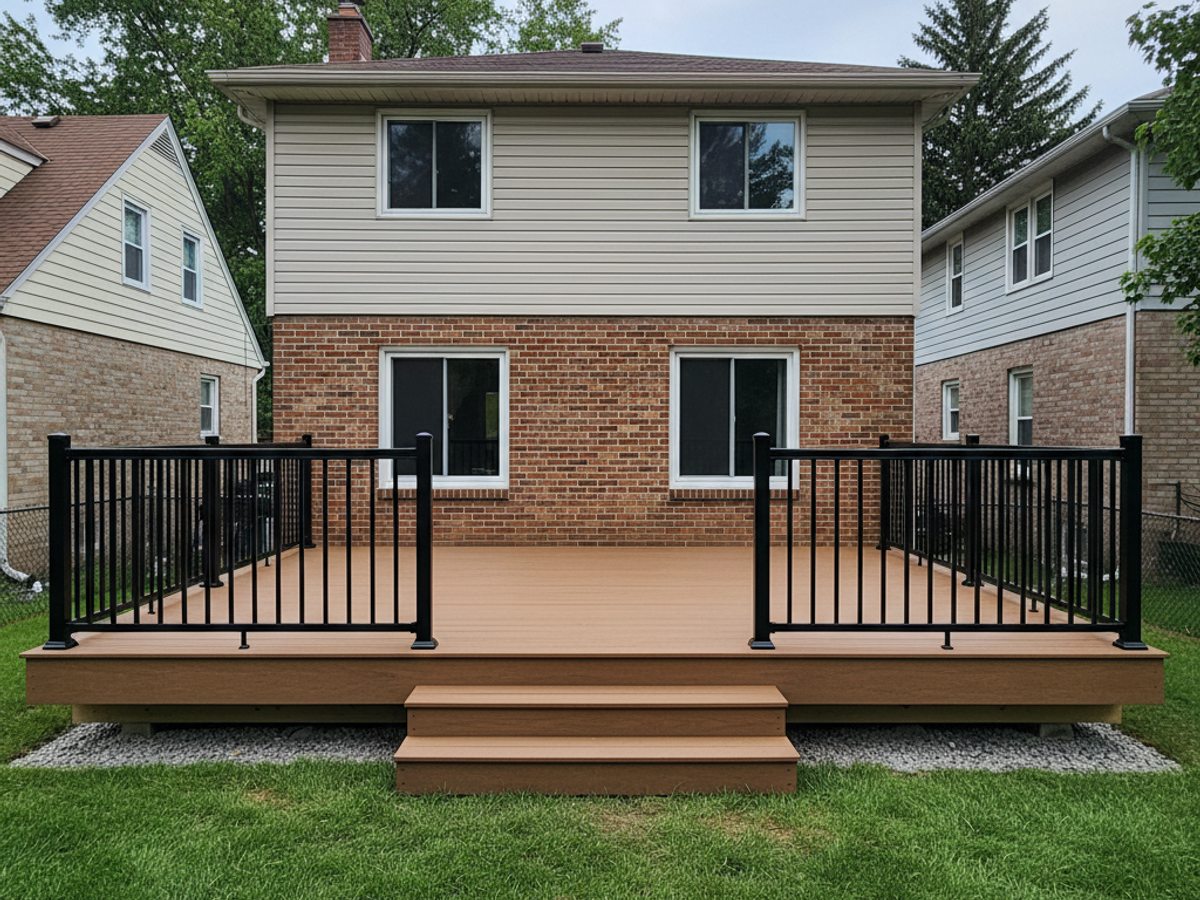
Homeowners ask us this constantly, usually in April when the snow's finally gone and they're itching to get started. The honest answer is that it depends on what kind of deck work you mean. Pouring new footings, staining an old deck, and replacing a few rotten boards all have different ideal windows in this climate, and Milwaukee's freeze-thaw cycle and humidity swings make the timing matter more here than it does somewhere like Arizona.
What the frost line actually controls
Southeastern Wisconsin's building code requires deck footings to sit below the frost line, which around Milwaukee County runs about 42 inches deep. That's not a suggestion. A footing poured above frost depth will heave when the ground freezes and thaws, and over a few winters you'll see a deck post lift, a railing go out of plumb, or a ledger pull away from the house. This single fact drives most of the calendar for new builds. From roughly December through March, the ground here is frozen solid enough that digging or augering a footing hole without specialized equipment is slow, expensive, or just not happening. Contractors who tell you they can pour footings in January are either using a frost breaker and heated ground blankets or they're skipping proper depth, and neither should be your first choice.
Spring: thaw, mud, and why we wait a few extra weeks
Once the frost comes out of the ground, usually by late March or into April depending on the winter, the clay-heavy soil common across the Milwaukee area turns into something closer to pudding for a few weeks. This soil holds water instead of draining it, which is great for a lawn and bad for a job site. Footing holes dug in saturated clay don't hold their shape well, and concrete poured against wet, unstable soil can settle unevenly once things dry out. We generally wait until the ground has drained and firmed up, which is often late April into May around here, before we start excavation on a new deck. Early spring is a fine time to get a design finalized, pull measurements, and submit for permits, so the actual digging can start the moment the ground cooperates.
Summer: good for building, trickier for finishing
June through August is prime deck-building season in Milwaukee, and for framing work that's genuinely the right call. The ground is stable, days are long, and crews can move fast. Where summer gets tricky is anything involving stain or sealant. Wisconsin humidity in July can sit in the 70s or higher, and finish applied in full sun on an 85-degree day will skin over before it has a chance to soak into the grain, leaving lap marks and a shorter-lived coat. Composite decking also expands and contracts more in summer heat than most homeowners expect, which is why board gapping on a composite install is spec'd differently than on cedar or pressure-treated pine. If you're having a deck stained, we'd rather do it on an overcast day in the 60s or 70s than the hottest afternoon of August.
Fall: the window most builders actually prefer
September and October are, in our opinion, the best stretch of the year for deck work in this area, and most experienced builders will tell you the same. Humidity drops, temperatures sit in a comfortable range for both working and for finish curing, and the lumber that went up over the summer has had a few months to dry out and stabilize, which matters if you're staining new wood rather than letting it season first. New construction started in September still has time to get footings, framing, and decking done before the ground locks up again, usually sometime in late November or December depending on the year. It's also often a quieter season for scheduling, since a lot of homeowners default to spring and summer without thinking it through.
Winter: not nothing, just different work
New footings are off the table once the ground freezes, but winter isn't a dead season for everything. Deck demolition that doesn't require digging can often still happen. Design consultations, material selection, and permit paperwork move along fine in January. If you're planning a spring project, winter is actually the smart time to lock in a contractor's schedule, since by March the calendar fills up fast with everyone who waited.
Permits and inspections don't follow the weather
Milwaukee and most of the surrounding municipalities, including Wauwatosa, Brookfield, and Franklin, require a permit for an attached deck or one raised more than a modest height off grade. The inspector typically checks footing depth and placement before you're allowed to backfill, then comes back for a framing inspection once the ledger and joists are up, and sometimes a final once railings and stairs are complete. Older neighborhoods like Bay View or Washington Heights often have homes from the early 1900s through the 1950s, where the rim joist and foundation conditions need a closer look before a ledger board gets lagged in. Newer subdivisions out toward Franklin or Menomonee Falls tend to have engineered floor systems that make ledger attachment more straightforward, though HOA rules in those areas can add their own review before the city even sees the application.
None of this means you're locked into one month a year. It means the type of work you want done points to a season, and a builder who's paid attention to a few Wisconsin winters should be able to tell you which one without guessing. If you want to talk through timing for your own yard, that's the kind of conversation we have on every job at Sunrise Deck Co.