Every job below is one we do ourselves across Milwaukee.
We build new decks from the ground up, starting with footings poured below the frost line so the structure doesn't heave when the ground freezes. Framing gets joist hangers and structural screws, not just toe-nailed lumber. We build in pressure-treated pine, cedar or composite, whatever fits your budget and how much upkeep you want to do.
Soft or spongy boards usually mean rot has started underneath, and we replace them before it spreads to the joists. A wobbly railing is almost always a loose post connection, not a problem with the railing itself. We also re-flash ledger boards that have started separating from the house, which is one of the more serious failures a deck can have.
Wood decking needs a fresh coat of stain and sealer every one to two years in this climate, or the boards gray, crack and start soaking up water at the end grain. We power wash first, let the wood dry for a couple of days, then apply a penetrating stain rather than a film-forming product that peels. Composite decking doesn't need this, which is one reason people switch.
Some yards need a multi-level deck to work around a walkout basement or a steep grade, others just need built-in benches and a place for the grill. We'll draw it up, tell you what's structurally possible on your lot, and get it through the permit process before we cut any lumber. This is the service to start with if you're not sure what you want yet.
Composite boards like Trex or TimberTech don't rot, don't need staining, and won't splinter, but they expand and contract more than wood so the framing and fastening have to account for that. We use hidden fastener systems on most composite jobs for a cleaner look with no screw heads showing. It costs more up front than pressure-treated pine, but you're not repainting it every other summer.
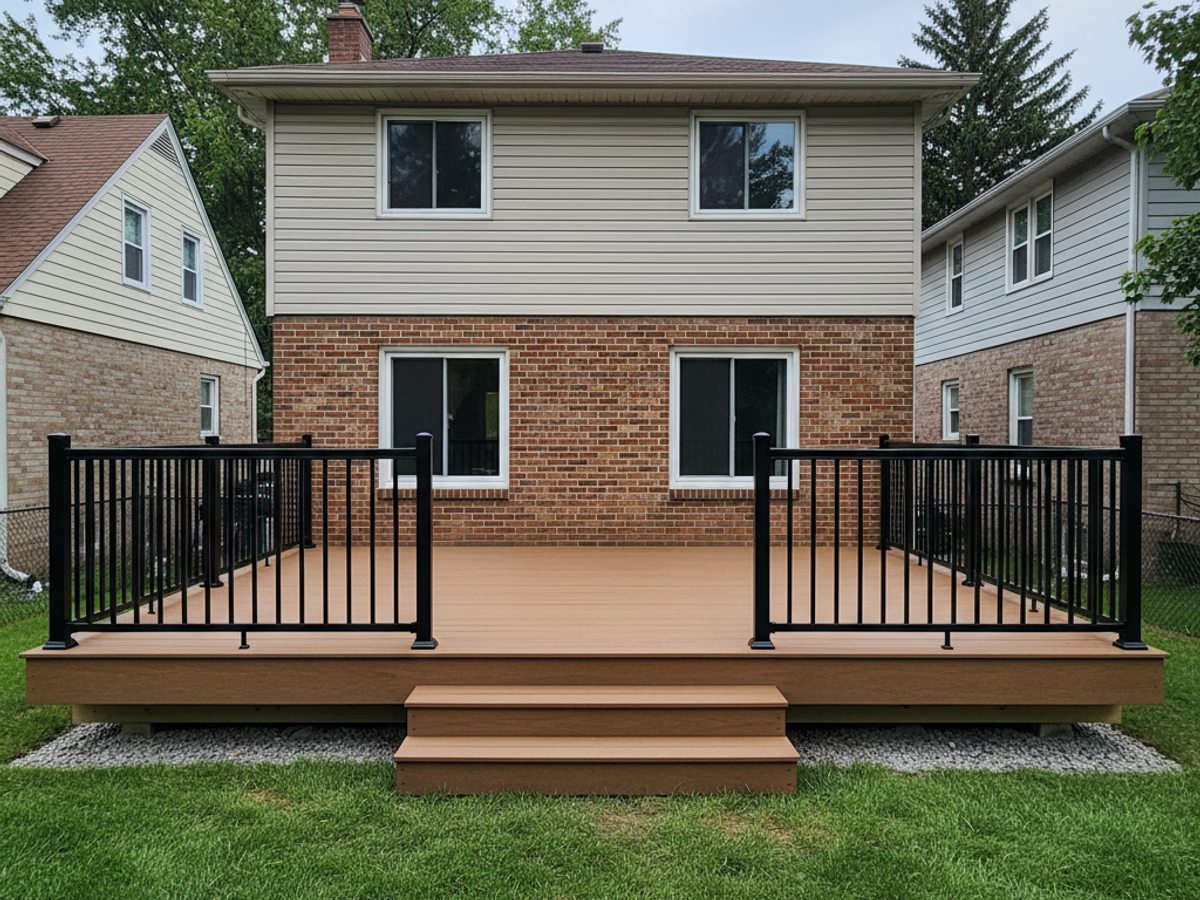
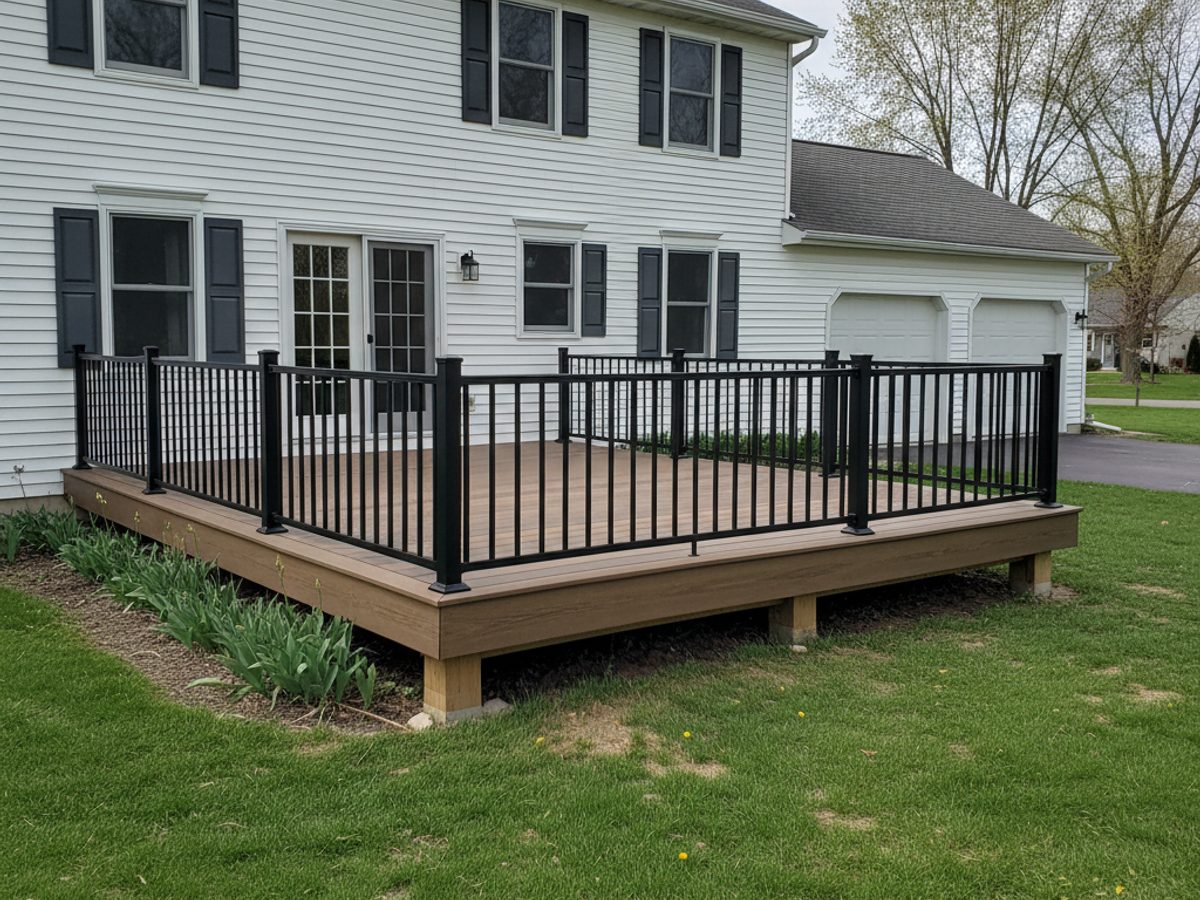
Wisconsin code calls for guardrails on any deck 30 inches or more above grade, with balusters spaced so a 4-inch sphere can't pass through. We install wood, composite, cable and aluminum railing, and can match an existing style if you're just replacing a damaged section. A railing that flexes when you lean on it is a post problem, and we fix that at the connection, not by adding more screws to the rail itself.
If your frame is solid but the decking is worn, cupped or splintering, you don't need a full rebuild. We pull the old boards, check the joists underneath for rot while they're exposed, and lay new decking with proper gaps for drainage and expansion. This is usually a one or two day job depending on the size of the deck.
Old decks come down fast once we start pulling ledger boards and posts, and we haul away the lumber so you're not stuck renting a dumpster. We check the footings while we're at it in case you want to reuse them for the new build. Nails and screws get swept up with a magnetic sweeper before we leave the yard.
Sloped lots and walkout basements often call for a deck that steps down in two or three levels instead of one flat platform. Each level needs its own beam and footing layout, and the stairs between them have to meet the same rise and run rules as any other exterior stairway. It's more engineering than a single-level deck, but it makes an awkward yard usable.
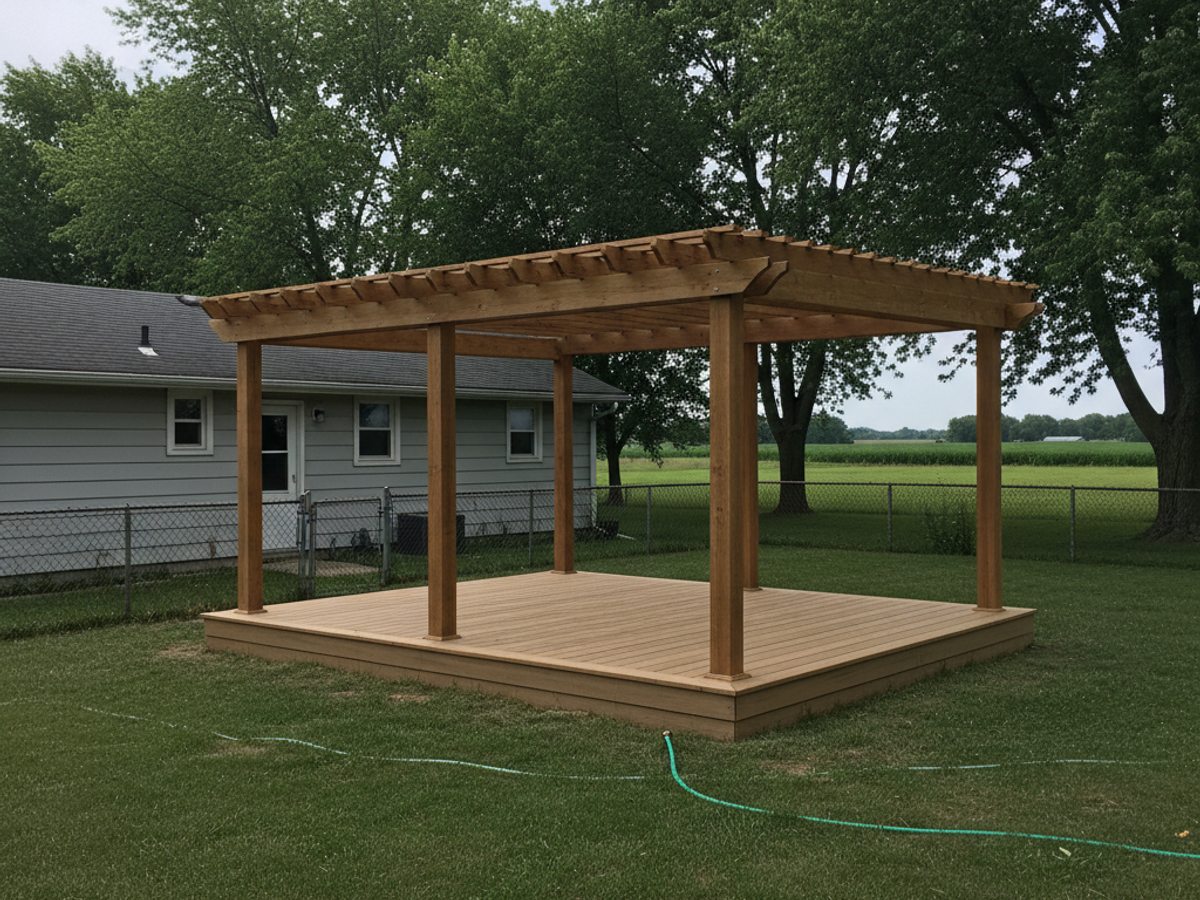
A pergola or a solid deck cover cuts down on afternoon sun and gives you somewhere to sit during a light rain. We attach these to the existing deck framing where it's strong enough, or add extra posts and footings where it's not. Worth planning before the deck is built if you already know you want one, since running wiring or footings after the fact costs more.
Four steps, and no surprises in any of them.
You tell us what you want doing, we look at what is actually there, and we ask the awkward questions early.
In writing, itemised, free. If something might add cost later we flag it now rather than at the end.
Same crew throughout. We cover your floors, keep the dust down and tidy up before we leave each day.
You point out anything you are not happy with and we fix it before the invoice, not after.
This is the ground we cover for deck work.
Questions that come up once a project gets moving.
Describe the problem and we will tell you what it probably is. No obligation.