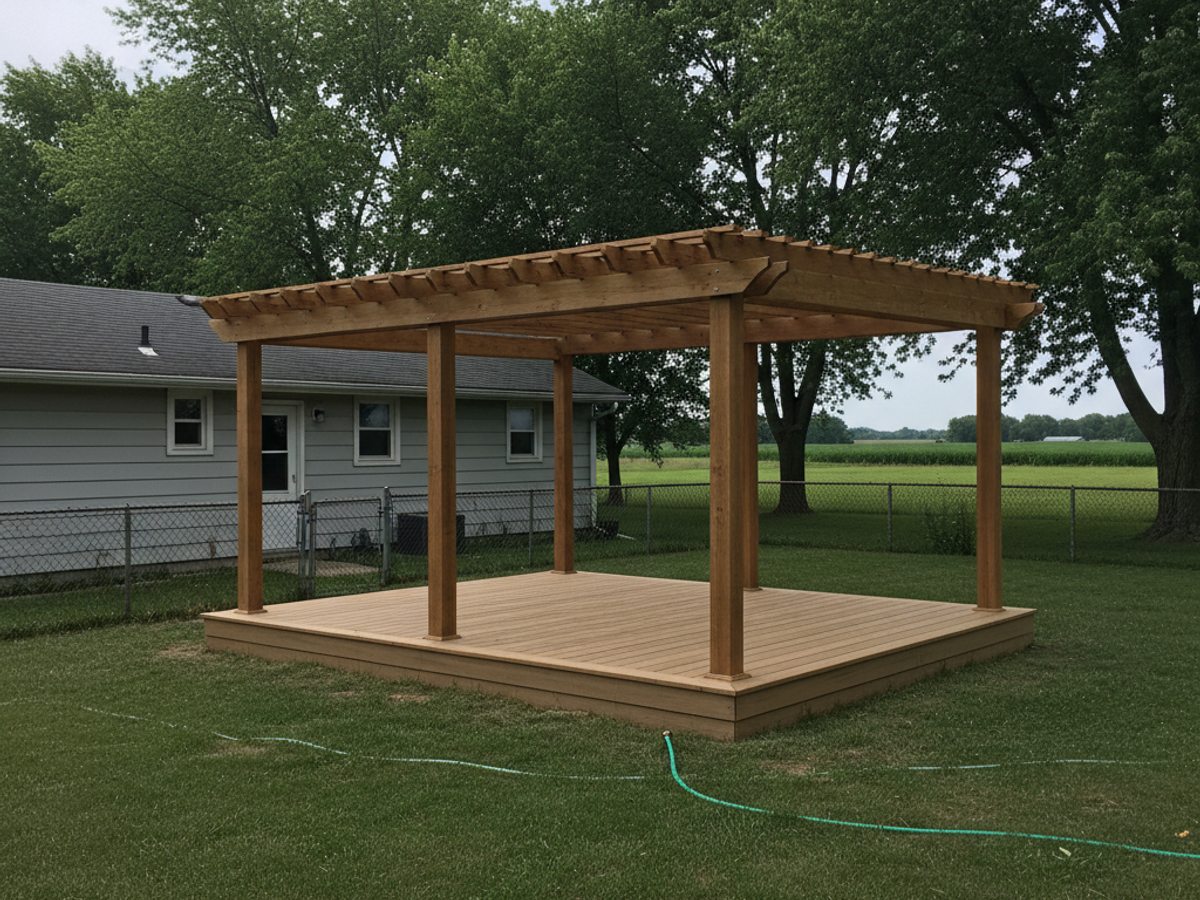
Milwaukee gets a real freeze every winter, and the ground here moves because of it. That single fact decides more about deck quality than almost anything a contractor will tell you in a sales pitch. If you only remember one thing from this post, remember to ask about frost footings before you ask about railing style.
A deck is mostly invisible once it's built. The boards you walk on are the least of it. What matters is under the ground and bolted to the house, and that's exactly the part a homeowner can't easily check after the fact. So the questions you ask before signing a contract are doing more work than any inspection you could do afterward.
Ask about frost depth, not just post size
Wisconsin building code requires footings to sit below the frost line, and in the Milwaukee area that's generally 42 inches down. A footing set at 24 or 30 inches might hold up fine for two winters and then heave the following spring when we get a hard freeze-thaw stretch in February or March. The deck starts to feel a little uneven at the stairs, then a railing post starts to lean, and by year four you've got a real problem that costs more to fix than it would have to build right the first time.
Ask the builder straight out how deep they're digging footings and what diameter tube they're using. A good answer sounds like a number, not a shrug. "We go to 42 inches, sonotube footings, poured against undisturbed soil" is a real answer. "We do what's standard" is not.
Know how permits actually work here
Most decks over 30 inches off grade, and plenty under that, need a permit in the City of Milwaukee and in the surrounding municipalities like Wauwatosa, West Allis, Greenfield, and Shorewood. Requirements vary a bit town to town, but the pattern is the same: you submit a plan showing footing locations and sizes, an inspector checks the footings before concrete goes in, and there's usually a final inspection once the deck is framed and railings are up. If a contractor tells you permits are a waste of time or that they'll "just build it and it'll be fine," that's not a shortcut, that's them asking you to take on the risk. An unpermitted deck can become your problem at resale when the buyer's inspector flags it and the sale stalls.
If you're in a subdivision built in the last twenty or thirty years, out toward Franklin or New Berlin, there's a decent chance there's an HOA on top of the municipal permit, with its own rules about deck height, material, and stain color. Ask about that up front too.
The ledger board is where most deck failures start
The ledger is the board bolted to your house that the rest of the deck framing hangs off of. It has to be lag-bolted or through-bolted into the house's rim joist, flashed properly so water doesn't get behind it, and it needs to carry a real load without pulling away from the wall. This is the single most common failure point in residential decks nationally, and it's why deck collapses almost always happen at the ledger connection, not out at the posts.
Milwaukee's older neighborhoods complicate this. A lot of the housing stock in Bay View, the East Side, and parts of Wauwatosa was built in the 1920s through the 1950s, sometimes with balloon framing or a rim joist that's seen decades of moisture. A builder who's done this work knows to check what's actually behind the siding before bolting anything to it, and sometimes that means sistering in new lumber or using a free-standing structure instead of attaching to the house at all. If a contractor doesn't ask to open up the siding or at least inspect the rim joist before quoting the ledger attachment, they're guessing.
Compare quotes on what's actually different, not the total
Two bids for the same deck can differ by a few thousand dollars, and the reason is almost never that one contractor is greedy. It's usually the footings, the fasteners, and the lumber grade. Pressure-treated Southern yellow pine framing is standard and fine. But there's a difference between using hot-dip galvanized or stainless structural screws rated for ground contact and using whatever deck screws were cheapest that week, and a low bid sometimes gets there by cutting joist spacing from 16 inches on center to 24, which you'd never notice from the surface.
- Ask what fastener brand and coating they use, not just "treated lumber."
- Ask joist spacing, and ask if it changes under a hot tub or built-in bench.
- Ask whether composite decking pricing includes the hidden fastener clips, which add real cost over face-screwing.
- Ask how many coats of stain or sealant come with a wood deck build, and when you're expected to reapply it. A new pressure-treated deck usually needs a season to dry out, roughly 6 to 12 months, before staining will actually hold.
Red flags worth walking away from
A contractor who won't put footing depth and fastener type in writing on the contract is telling you those details are negotiable after you've already paid a deposit. Walk away from anyone who wants full payment up front instead of a deposit with the balance due at completion or in stages. Walk away from a quote that arrives without ever measuring your yard or checking your lot's grade, because runoff and drainage around a deck's footings matter, especially on the clay-heavy soil common through much of Milwaukee County, which holds water and puts more pressure on footings than sandy soil would.
Also be wary of anyone promising a full deck build, tear-off included, in a single weekend once the ground has thawed enough to dig footings. Concrete needs time to cure before you load it, typically a few days minimum before framing goes on top, and a rushed schedule is usually where corners get cut.
None of this means you need to become a structural engineer before hiring someone. It means asking a handful of specific questions and paying attention to whether the answers are specific back. A builder who's spent years putting decks into Milwaukee's clay soil and freeze-thaw winters will have those answers ready without being asked twice. That's the kind of work we do at Sunrise Deck Co, and it's worth holding any builder you're considering to the same standard.